Energy-secure societies are stronger in times of crisis
Extreme weather, cyber threats and bottlenecks in the power grid have turned energy security into an issue that quickly moves from policy documents into everyday life. For Magnus Nilsson, CEO of Glava Energy Center, energy security is about robustness: ensuring that the energy system continues to function even when it is exposed to disruptions. It is also about moving the capacity to act closer to municipalities, businesses and households.
– At its core, energy security is about how resilient the system is – how well it can withstand disruptions and how quickly it can recover, says Magnus Nilsson.
Energy security as part of decision-making
For him, energy security is not a side issue, but something that should be weighed into every major energy decision.
– When discussing the future energy system, energy security needs to be a clear part of the decision-making framework. Different solutions provide different levels of robustness – and we need to make that visible.
It also means viewing energy more broadly than just electricity generation. Electricity, heating, industry, buildings and digital systems are interconnected.
– If sectors operate separately, we miss the bigger picture. The result can be a system that is both more expensive and more vulnerable.
System nodes are critical
Sweden enjoys high reliability in everyday operations. At the same time, the energy system is built around central nodes where major energy flows pass through.
– When you stand at a location where the national transmission grid and the regional grid intersect, you realize how critical those nodes are. If one such point is taken out, entire regions are affected – and that kind of equipment cannot be replaced overnight.
The country’s geography reinforces this. Much of the electricity is produced in the north, while a large share of consumption takes place in the south.
– Long distances mean more links in the chain that can be affected. The more dependencies, the greater the vulnerability.
Energy security is therefore not only about how much electricity we produce, but about how the system is structured.
Municipalities play a key role – and need support
An important part of resilience is determined locally. Municipalities decide how land and areas are used and can therefore influence where energy production, grid infrastructure and industry are established.
– Municipalities have important tools. At the same time, the energy system is complex, and it cannot be taken for granted that all the necessary expertise is in place. This requires cooperation and access to knowledge.
In everyday life, it works to import electricity from other regions. But during major disruptions, priorities must be made.
– In a crisis, critical societal functions such as hospitals and water supply will receive electricity first. That is obvious. But it also means that other activities may be without power for a period.
This is also about competitiveness and preparedness. Businesses that generate jobs and tax revenues must function in everyday life – but also have the conditions to continue operating in a crisis. That is why resilience needs to be built into planning from the outset.
Calling for more knowledge and less polarization
The energy debate is often polarized – particularly regarding wind power, nuclear power and electricity prices. Magnus Nilsson believes it is reasonable to have different views on strategic choices – but the discussion must be grounded in facts and include multiple perspectives.
– We may disagree on the solutions. But the discussion must be based on facts about how different energy sources complement each other and what composition the energy system actually requires.
Strengthening energy security requires technology, investment and clear regulations. But that is not enough. Decisions about the energy system affect people’s everyday lives, finances and local environments. That is why forums are needed where facts, alternatives and consequences can be discussed openly.
– If people do not understand why decisions are made or feel excluded from the process, trust declines. And that makes it harder to implement the changes that are actually needed.
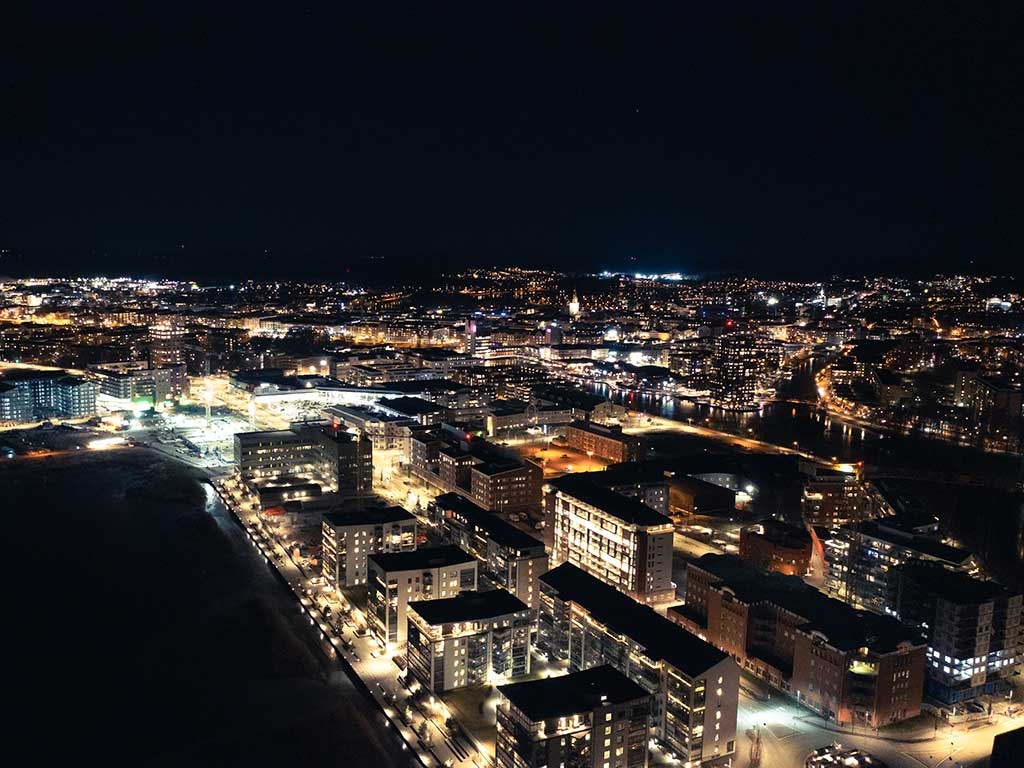
Photo caption: A robust energy system often goes unnoticed – until it fails. Energy security is about keeping society running even under strain. Photo: Fredrik Karlsson / SolstaFoto
Five steps toward greater energy security
Glava Energy Center focuses on five areas that can strengthen the resilience of the energy system.
- Increase local and regional electricity generation.
More electricity generation from solar and wind close to where it is used frees up dispatchable hydropower and reduces dependence on long-distance transmission.
– When energy is produced closer to where it is consumed, robustness increases.- Strengthen sector coupling.
Energy producers, grid operators, industries and property owners need to cooperate more effectively to use resources efficiently.
– No single actor can solve these challenges alone. The more sector coupling, the greater the benefits.- Develop business models for cooperation.
Local flexibility markets, energy communities and direct local energy agreements enhance energy security in both normal times and crisis situations.
– We need systems and business models that function in both normal and crisis conditions.- Build energy buffers.
Storage solutions such as batteries or thermal storage can mitigate the effects of disruptions and create room for action during disturbances.- Accelerate electrification.
Electrification reduces dependence on imported fuels and strengthens regional and national energy supply – especially when combined with flexibility and storage.
– When we produce more electricity domestically and use it more intelligently, the system becomes both more robust and more sustainable.This work is developed within projects including:
- LOKEN – Local Energy Management Värmland (funded by the European Regional Development Fund and Region Värmland)
- Innovite – Innovation Cluster for Sector Coupling (funded by the Swedish Energy Agency)
- GränsEnergi – Energy Communities in the Border Region (funded by Interreg Sweden–Norway and Region Värmland)