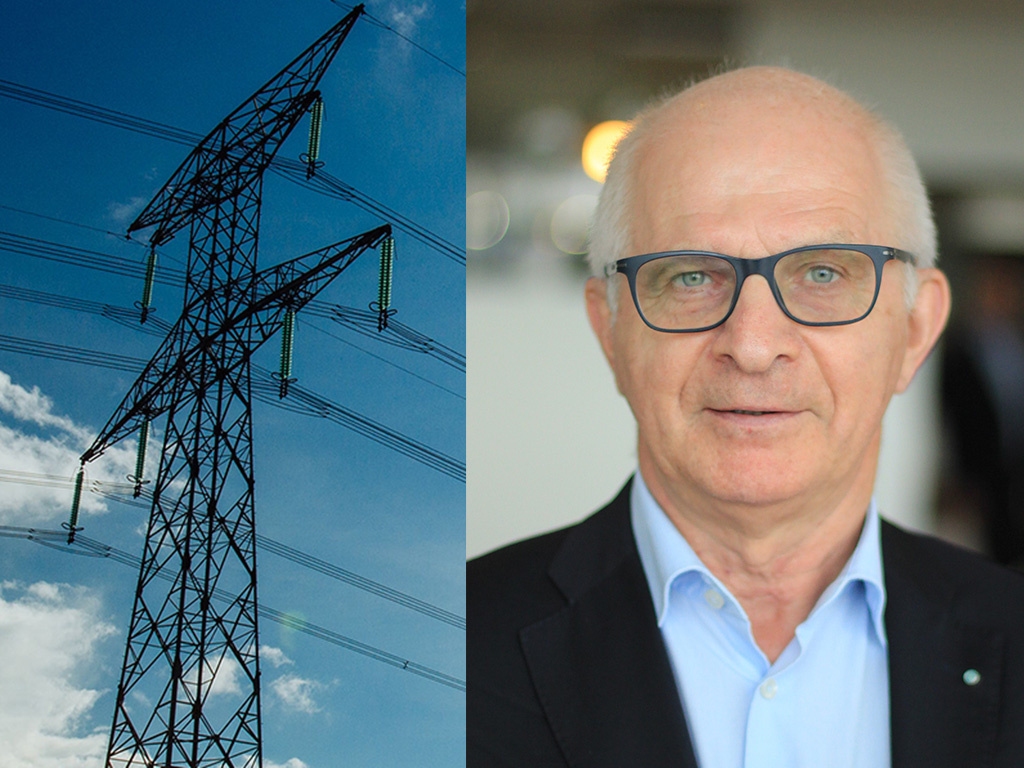
How Sweden can accelerate electrification – Bo Normark on the way forward
The electrification of industry and society is crucial for Sweden’s future – but the pace needs to increase. At Glava Energy Center’s Energy Conference on 2 June, Bo Normark, a leading expert in power technology and recipient of the Royal Swedish Academy of Engineering Sciences (IVA) Gold Medal 2024, shares his insights on how development can be accelerated.
Sweden has a stronger starting point than Europe as a whole when it comes to electrification. At the same time, progress over the past 20 years has been limited, and the next step must be taken at a significantly faster pace. This is the view of Bo Normark, one of Sweden’s most influential voices in electrification. His work on energy storage and smart energy systems has made him a key figure both in Sweden and across Europe.
– In response to the EU’s electrification plan, Sweden should develop a national plan that is considerably more ambitious, says Bo Normark.
The European Commission’s upcoming Electrification Action Plan aims to accelerate the transition to an electrified energy system by addressing key barriers and identifying priority measures. However, Sweden has an opportunity to move ahead already, according to Normark.
– We need to electrify the entire transport sector, all work machinery, and heavy industries such as steel and cement – which would allow Sweden to strengthen its position in the production of, for example, fossil-free steel, says Bo Normark, who is active within InnoEnergy – an initiative for innovation and sustainable energy systems launched by EIT – the European Institute of Innovation and Technology.
Concrete measures to increase the pace
What is required to accelerate electrification? Bo Normark calls for broad measures that strengthen incentives across the board. These include reduced electricity tax for households, no electricity tax for district heating and heavy transport, government credit guarantees for long-term power purchase agreements, requirements for fossil-free products in public procurement, increased compensation for local fossil-free electricity production, and measures to facilitate flexibility and energy storage. He refers to the energy company Fortum’s Electrification Agenda 2026, which points in this direction.
Bo Normark also sees significant potential in the sector coupling that emerges between the power industry, the transport sector and manufacturing as electrification progresses.
– This creates major opportunities, for example to use vehicle batteries within the power system or to utilize flexibility in electrified industrial processes.
Flexibility – the key to the future power system
Flexibility is a central element of smart grids, according to Bo Normark. The transition of both electricity production and consumption is leading to increased variability in the power system, and for optimal use, production must be more actively balanced with consumption.
– From an energy perspective, we will much more often see surplus production rather than shortages, which means we need to “absorb” overproduction, just as we will need to limit consumption at other times, he says.
Flexible consumption and energy storage are solutions that can manage both overproduction and peak demand, while also helping to counteract local capacity shortages.
Local investments must be rewarded
The local perspective has gained increasing attention as a pathway to more robust energy systems. Bo Normark predicts that investments in energy solutions will increasingly come directly from electricity consumers rather than energy or grid companies. However, the installation of local generation, storage and flexibility must be rewarded, he argues, as these reduce the need for costly grid investments.
– There are already promising examples of local flexibility markets that can serve as models. In addition, we need to locally reward residents who accept certain local impacts from the establishment of wind or solar power.
An optimistic outlook
Sweden managed to phase out oil for heating within 10–15 years – and the same is possible for the transport and industrial sectors, according to Bo Normark. He is optimistic about the coming decade, both in terms of electrification and the resilience of the power system – that is, its ability to withstand disruptions.
– In my vision of the future, we have also built resilience so that in most parts of Sweden we can handle power outages lasting 4–8 hours. This would significantly ease the burden on system operators and provide a more robust energy system than today, he says.
Register for Glava Energy Center’s Energy Conference
Bo Normark is one of the speakers at this year’s Energy Conference at Glava Energy Center. Would you like to learn more about how Sweden can accelerate electrification – and which concrete solutions are needed to take the next step? Register for Glava Energy Center’s Energy Conference on 2 June!