Knowledge Boost for Arvika’s Politicians – What’s Needed for a Secure Energy Supply
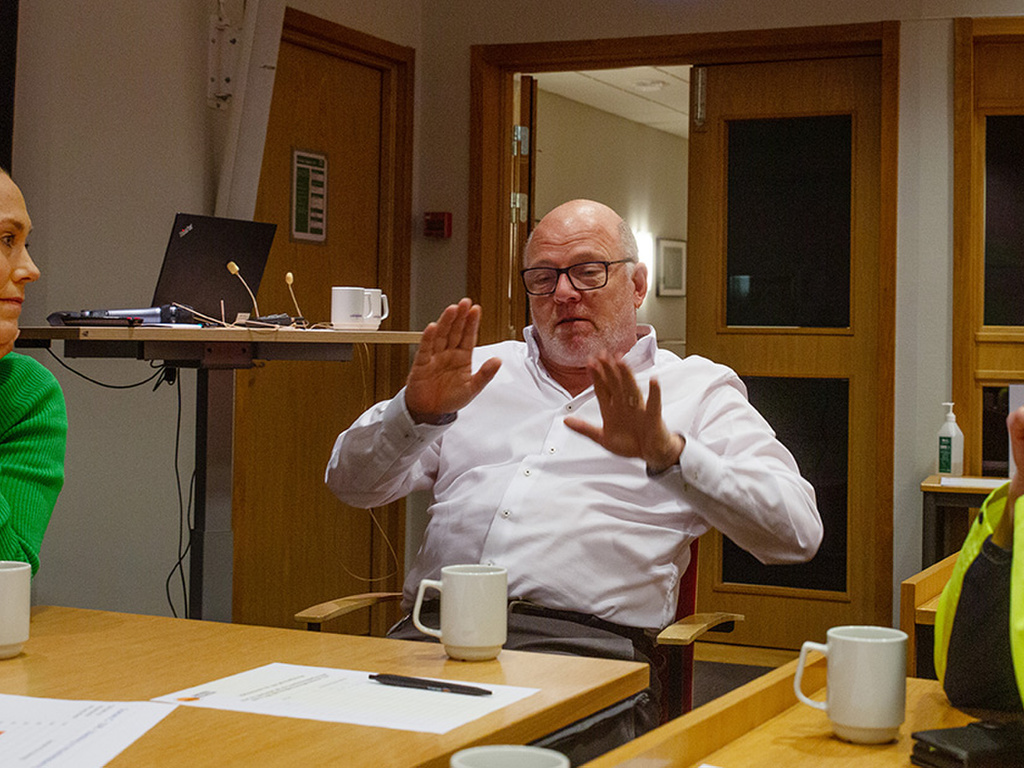
Arvika Municipality has assessed its current energy use and developed possible scenarios for future energy and power needs. In a final workshop on May 6, politicians from all local parties were invited to learn what roadmap Arvika needs to follow to meet its climate goals.
Glava Energy Center and LOKEN – Local Energy Management Värmland – have played key roles in leading and sharing knowledge within Arvika’s energy management group.
Around 30 people attended the workshop, including politicians, local grid operators, property owners, energy strategists, researchers, and representatives from Arvika’s business community. The political majority (Social Democrats, Left Party, Green Party, and Center Party) was represented, as was the opposition (Moderate Party and Christian Democrats). The Sweden Democrats and Arvika Party were invited but did not attend.
Henrik Samuelsson (Moderate Party) and Zara Hedelin (Left Party) usually disagree politically, but both agreed that a secure energy supply and a shift to renewable energy are crucial – to protect both jobs and the climate.
Wind power sparks interest and raises questions
Wind power was one of the topics discussed – a subject that sparks strong opinions.
– Set requirements and negotiate with wind power developers for compensation to local residents and the community, said Magnus Fredricson, researcher and strategist for sustainable development at the Skaraborg Municipal Association. They have adopted an energy supply plan – a political agreement that guides future energy efforts.
Today, Arvika imports a large part of its electricity and wants to reduce this dependency. The long-term goal is for Arvika to become a significant energy producer. The municipality wants to invest more in wind and solar power.
Local energy production will increase
In the 2045 scenario, electricity demand is expected to grow from today’s 340 GWh to 1,000 GWh. To meet this demand and stay within the carbon budget, a rapid expansion of wind and solar power is needed. About 40 wind turbines could provide 400 MW – but since this is intermittent power, it depends on weather and isn’t always available when demand is highest.
Both Volvo CE and Swegon stressed the growing need for power – having enough electricity exactly when it’s needed. Swegon highlighted the need for truck charging infrastructure, as many trucks pass by their factory daily.
Volvo in Arvika, which is switching its production to electric wheel loaders, foresees high electricity demands when many vehicles are charged at the same time.
A warning was raised: several large employers in Arvika have foreign owners. If the municipality cannot guarantee a reliable, fossil-free energy supply, there is a risk these companies might move their production elsewhere.
Citizens will have their say
Peter Söderström (Social Democrats), Chair of the Municipal Executive Board, saw the meeting as an important chance to raise awareness about Arvika’s energy situation.
– It's clear that secure electricity supply is crucial, especially for local businesses. Energy is a cross-political issue, and it was good that we politicians were invited to get a shared understanding of the roadmap ahead.
Three workshops have now been held. Next, the needs, future scenarios, and strategies will be summarized. In November 2025, the draft energy roadmap will be presented for public consultation. The final energy plan is expected to be adopted by the municipal council in spring 2026.